

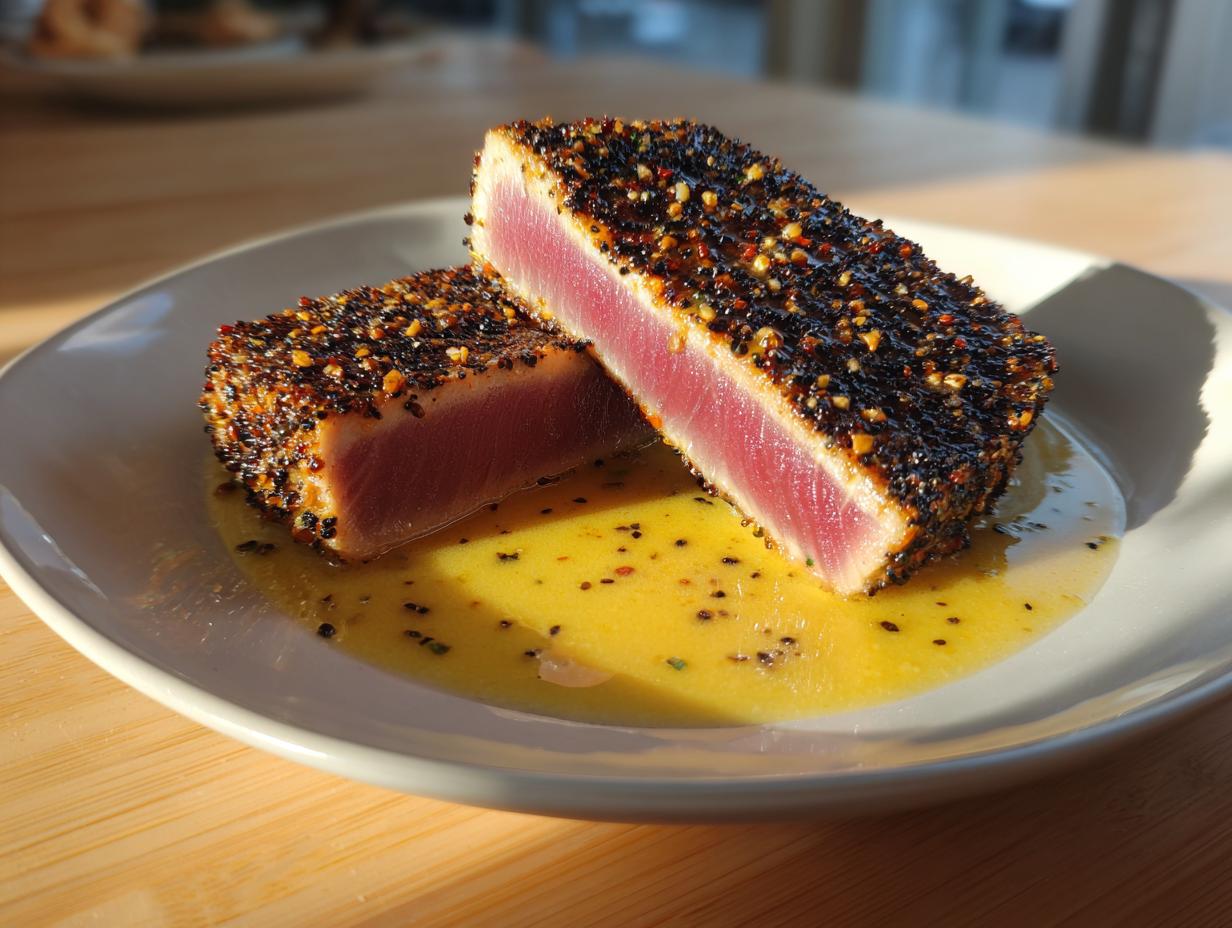
I’m going to let you in on a little secret: getting that gorgeous, dark, spicy crust on your fish usually means dealing with an absolute smoke alarm disaster at home. But not anymore! I’ve spent years perfecting this method so you can nail that restaurant-quality blackened tuna steak finish without evacuating your kitchen. This isn’t meant to be complicated; it’s the perfect quick weeknight tuna recipe that tastes like you spent hours fussing. Here at Seventh Flavour, we focus on making sure you feel confident. That’s why I (Aria Sterling), after leaving my marketing career to focus on cooking, developed this guide—clear, reliable steps so you can achieve that amazing spicy, seared tuna every single time. You can read more about our journey over at our story!
- Why This Perfectly Blackened Tuna Steak Recipe Works
- Essential Ingredients for Your Blackened Tuna Steak
- How to Blacken Tuna Steak: Step-by-Step Instructions
- Tips for Restaurant Style Blackened Tuna Steak Success
- Ingredient Notes and Substitutions for Blackened Tuna Recipe
- Serving Suggestions for Your Blackened Tuna Steak
- Storage and Reheating Instructions for Leftover Blackened Tuna Steak
- Frequently Asked Questions About Blackened Tuna Steak
- Nutritional Estimates for Your Healthy Blackened Tuna Steak
- Share Your Seventh Flavour Creations
Why This Perfectly Blackened Tuna Steak Recipe Works
The real magic here isn’t just the heat; it’s timing! We get that intense, flavorful crust—true spicy seared tuna—without letting the interior cook past a beautiful medium-rare. It’s fast, ridiculously flavorful, and honestly one of my favorite healthy blackened tuna ideas for when I need dinner on the table quickly. You get all the flavor payoff without any of the fuss.
- Speed: Ready in under 20 minutes total.
- Flavor: A deep, savory, spicy coating melts into the fish.
- Health: High in protein and naturally low in heavy fats.
- Control: You dictate the sear level perfectly every time.
If you love quick, vibrant meals, check out some of my other healthy lunch recipes!
Essential Ingredients for Your Blackened Tuna Steak
Okay, getting the right stuff together takes maybe ten minutes, which is fantastic because that’s nearly the entire prep time for this dinner! Remember, we are working with beautiful ahi tuna steaks, and you really want them to be about one inch thick. That thickness is the secret weapon to ensuring you get that magnificent crust while keeping the center just slightly pink.
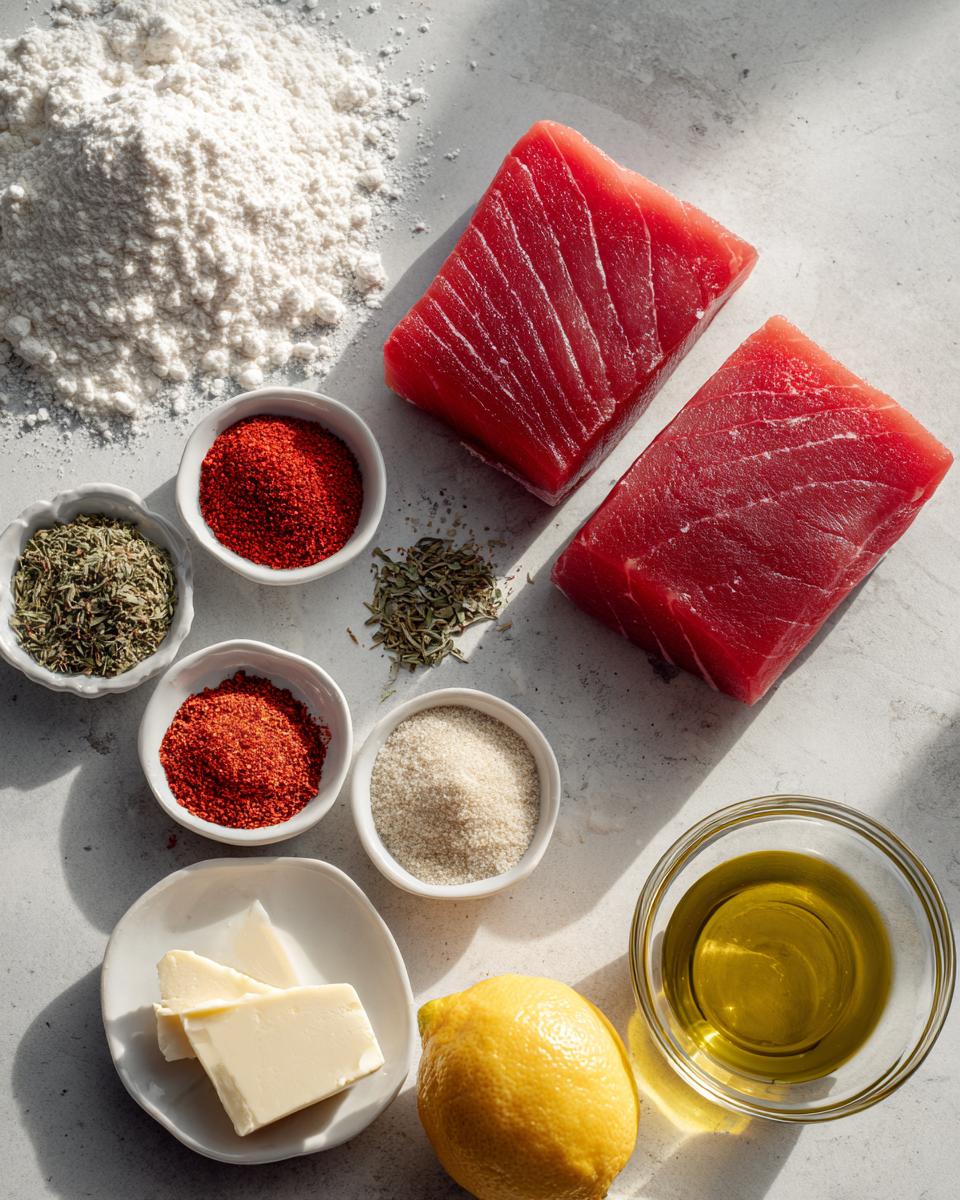
For the Blackening Seasoning for Fish
This mixture is what brings the drama! Getting your blackening seasoning for fish just right means measuring precisely. That huge hit of paprika is what gives us that signature dark color, and the cayenne is there to give us a little kick.
- 1/4 cup all-purpose flour
- 2 tablespoons paprika (don’t skimp!)
- 1 tablespoon dried oregano
- 1 tablespoon dried thyme
- 1 tablespoon garlic powder
- 1 teaspoon onion powder
- 1 teaspoon cayenne pepper (or adjust to your preferred heat level)
- 1 teaspoon salt
- 1/2 teaspoon black pepper
For the Lemon-Butter Sauce
We make the sauce right in the same pan, so trust me, cleanup is a breeze! These ingredients come together in about 60 seconds after the fish is out.
- 2 tablespoons unsalted butter
- 1 tablespoon fresh lemon juice
- 1 clove garlic, minced
How to Blacken Tuna Steak: Step-by-Step Instructions
This is where the magic happens, and honestly, it moves fast! Don’t walk away from the stove once the fish hits the pan. We are aiming for that amazing crust while keeping the inside looking gorgeous—that perfectly cooked rare tuna steak we all love.
Preparing and Seasoning the Tuna
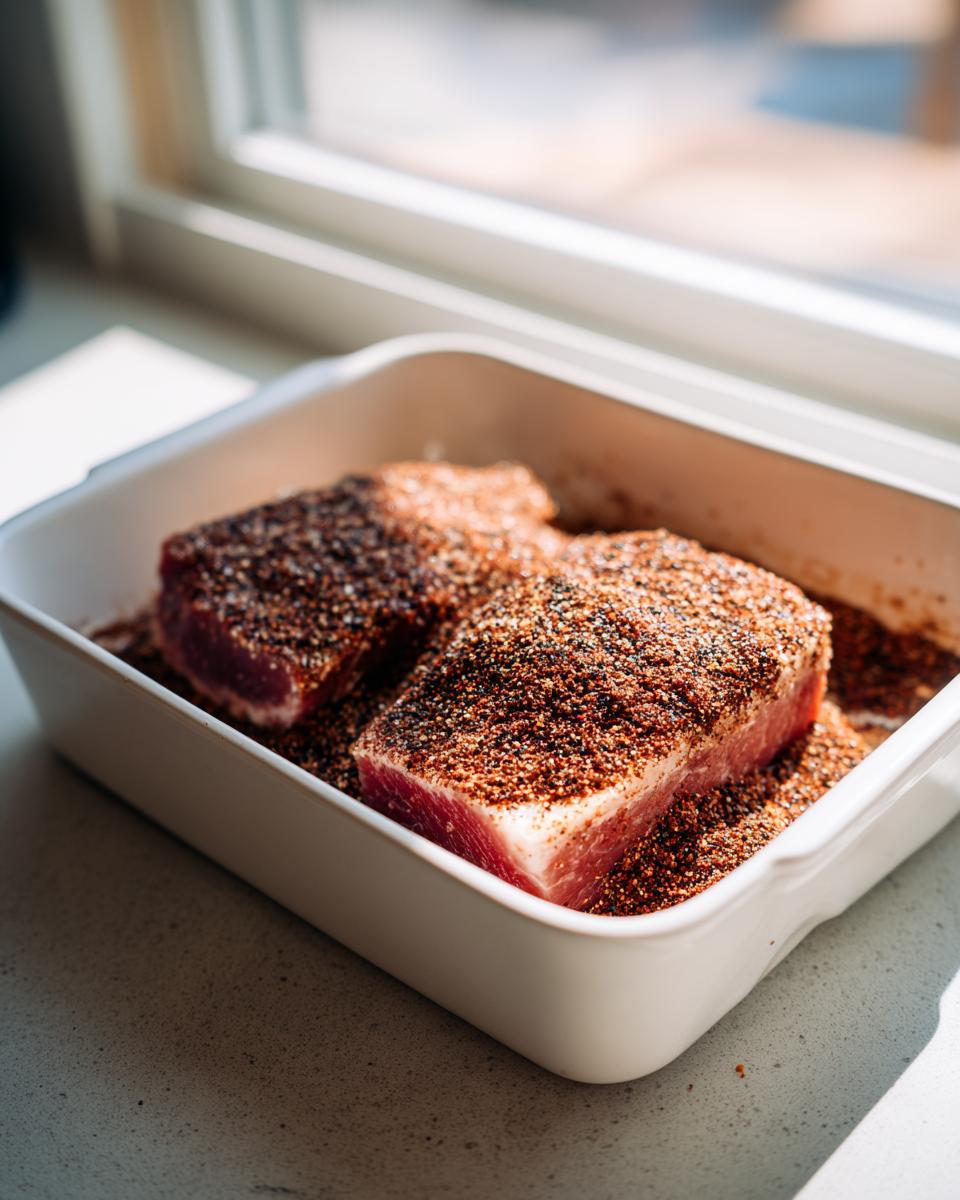
First things first: moisture is the enemy here. Grab your tuna steaks and pat them down really, really well with paper towels until they feel completely dry. This helps the flour mixture stick and prevents the fish from steaming instead of searing. Next, dredge that steak through your seasoning blend. You want a good, even coating on all sides. Once coated, flip the steak over in your hand and give it a little shake—but don’t shake *too* hard! We need that light layer of flour to turn dark and crispy; too much excess flour will just burn black instead of blackening beautifully onto the fish.
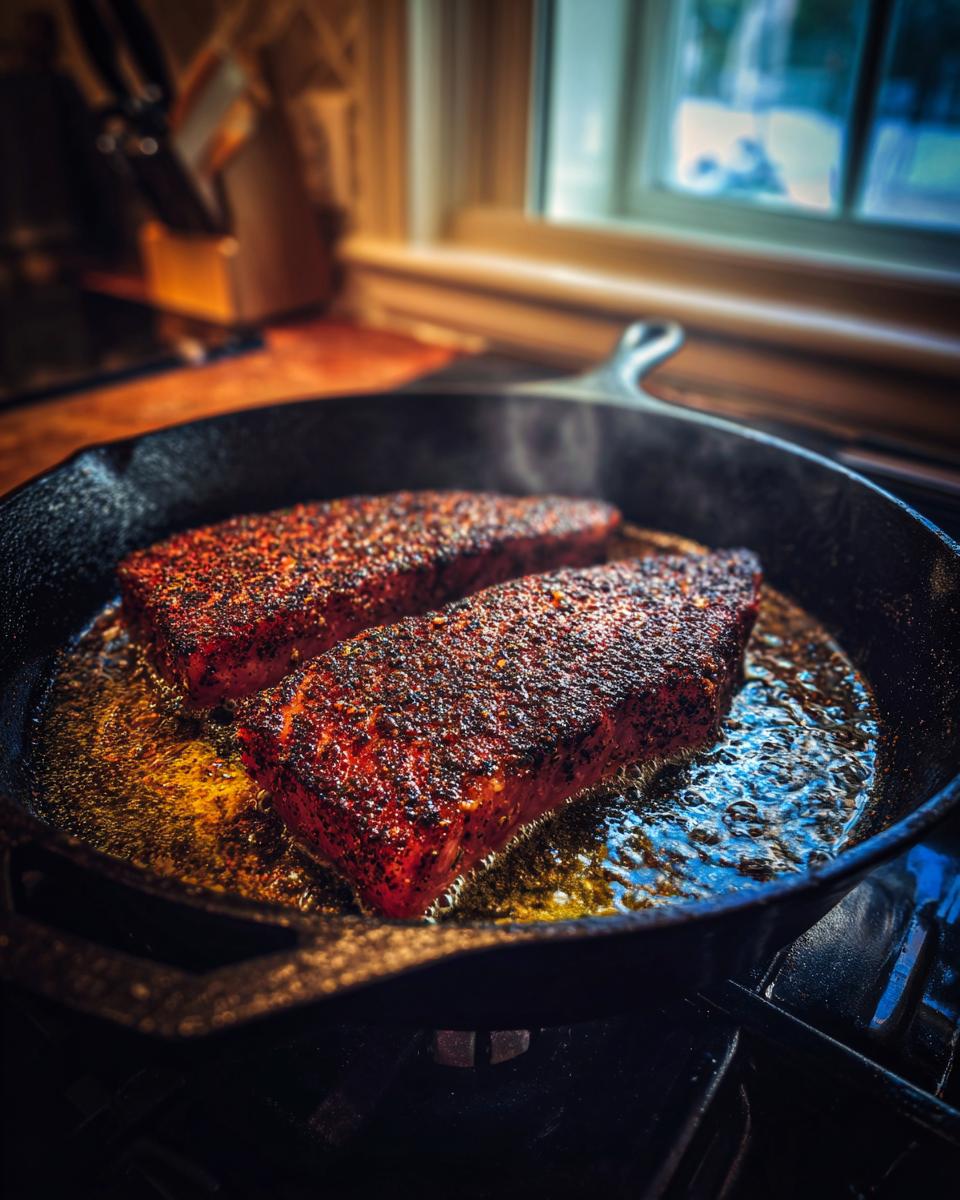
Mastering the Sear: How to Blacken Tuna Steak
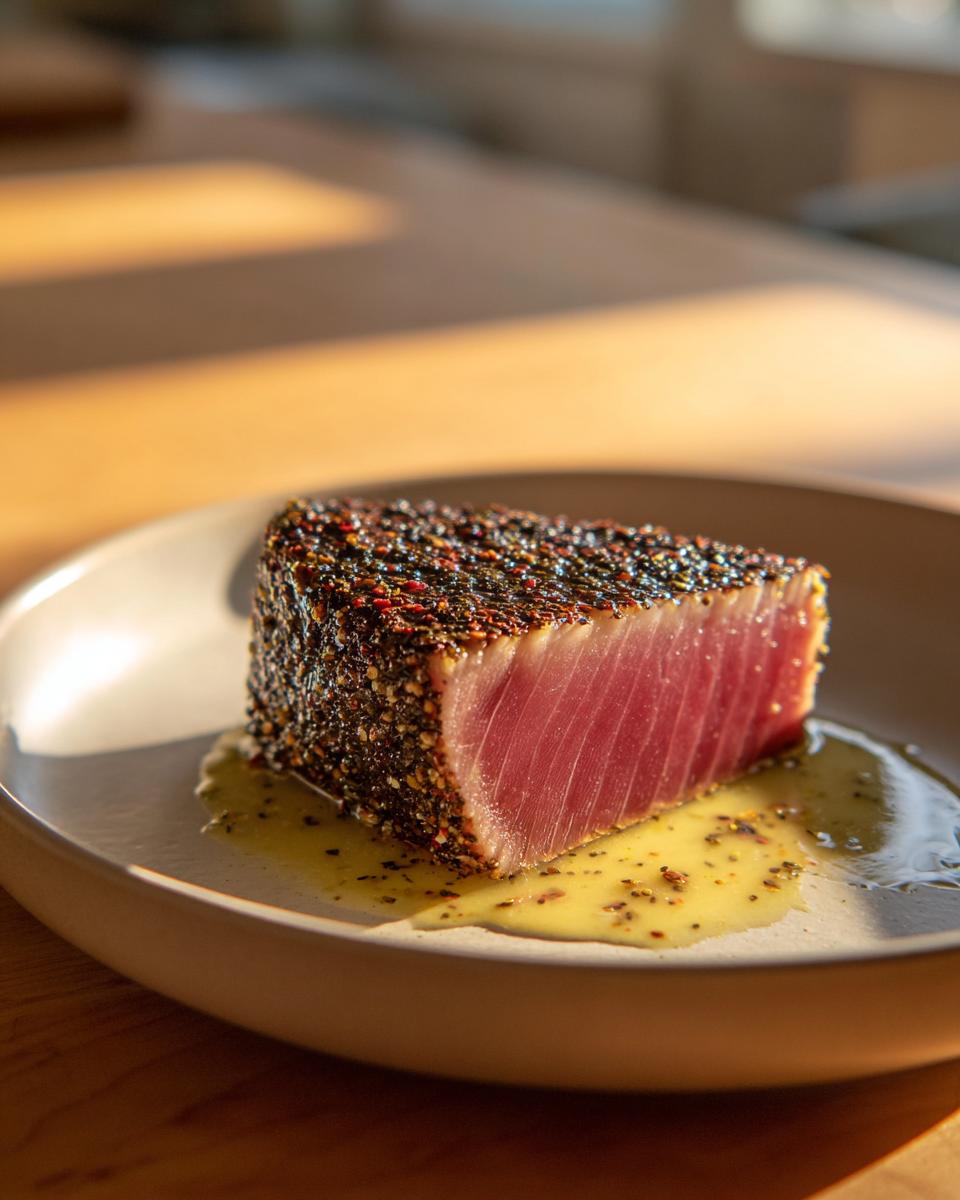
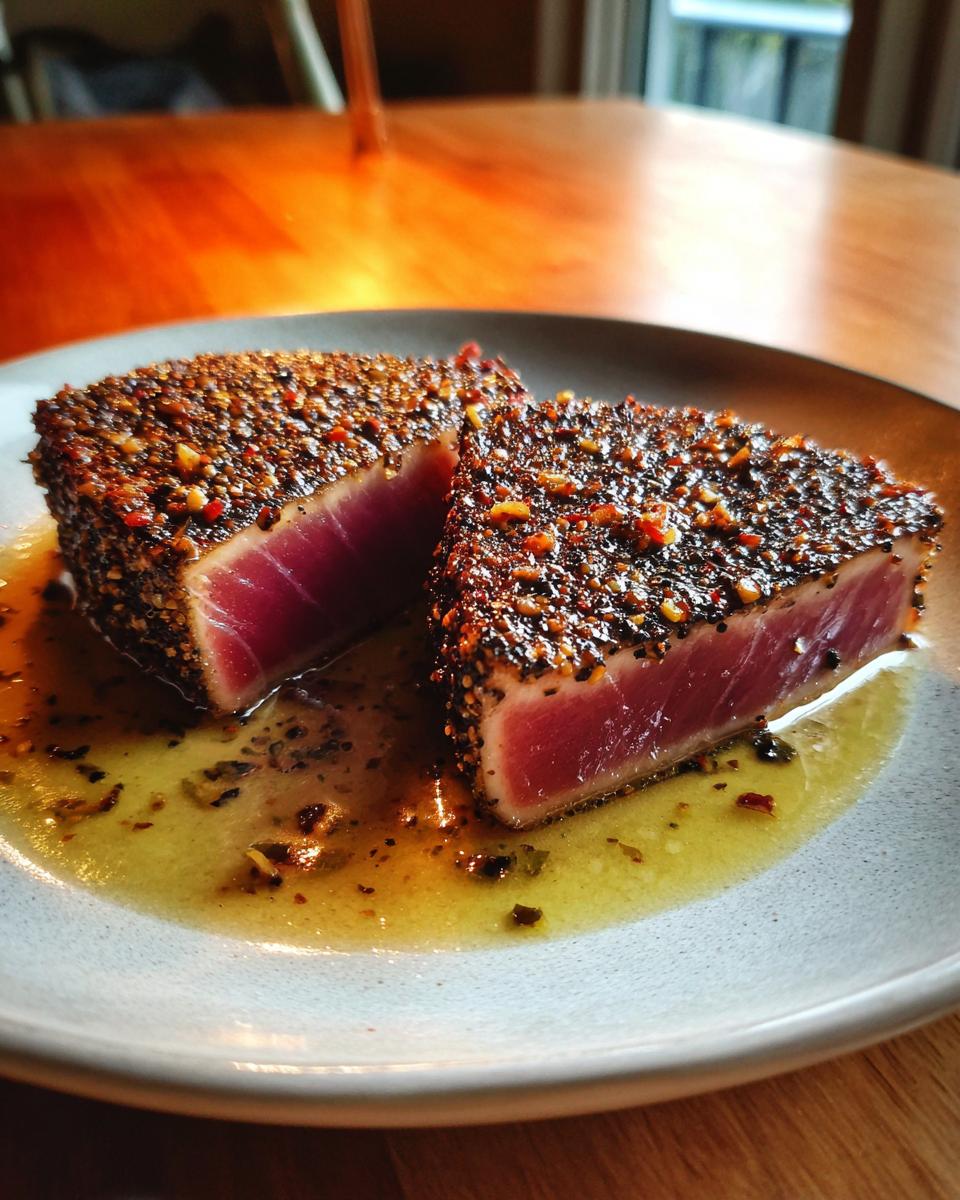
Now, turn your attention to your skillet. You absolutely need that pan hot—I mean ripping hot! I always use my favorite cast iron because it holds heat better than anything else, which is essential for searing cast iron tuna. Add your olive oil and the tablespoon of butter, and wait until that butter foams up and starts to brown a little. That signals it’s hot enough. Gently lay the seasoned tuna in the skillet. Sear it for just 2 to 3 minutes per side for that perfect medium-rare. I know it’s tempting to peek, but try to leave it alone so that dark crust can really set!
Resting and Finishing the Blackened Tuna Steak
Once you pull the steaks out—they should look deeply browned and spicy—don’t cut into them right away! Cover them loosely with foil and let them rest on the cutting board for about five minutes. This is crucial for keeping the juices where they belong. While they rest, wipe out most of the excess dark bits from the pan, turn the heat down low, and melt your remaining butter with the garlic until you can smell it. Take the pan completely off the burner before you swirl in the lemon juice; trust me, if you add lemon to scorching hot fat right on the flame, it gets bitter fast. Spoon that bright, zesty sauce right over your rested, pan seared blackened ahi!
Tips for Restaurant Style Blackened Tuna Steak Success
Getting that smoky, deeply colored crust that looks like it came straight from a busy kitchen takes a tiny bit more attention than just throwing it in a pan. My biggest pro tip for achieving truly restaurant style blackened tuna steak is mastering the temperature of that skillet. If it’s not hot enough when the tuna goes in, the flour coating absorbs the fat immediately and turns soggy instead of forming that signature dark, delicious crust.
If you find your kitchen filling with too much smoke—which happens with this kind of high-heat cooking—try reducing the amount of butter and relying more heavily on the oil to start. We want that crust to mimic a classic Cajun blackened tuna, but we don’t want to burn the spices to a bitter crisp. Remember to pat the fish ultra-dry before dredging; this separation of wet and dry surfaces is key for a perfect pan seared blackened ahi.
If you are looking for more speedy meal ideas for busy evenings, check out my collection of quick weeknight dinners!
Ingredient Notes and Substitutions for Blackened Tuna Recipe
I want you to feel totally confident making this, so let’s talk flexibility! While the recipe lists specific amounts, sometimes you just don’t have everything on hand. Don’t let that stop you from making this super easy blackened tuna dinner. If you run out of cayenne, try adding a pinch of red pepper flakes for that burst of heat, or even smoked paprika if you want a deeper, smokier flavor profile instead of immediate spice.
The tuna steak itself is where you can’t cut too many corners—seriously, use ahi tuna if you can find it! Tuna steaks should be firm and vibrant, ideally around an inch thick. If your steaks are thinner, you’ll need to cut the cooking time down significantly, maybe just 90 seconds per side, or you risk ending up with well-done fish instead of that lovely medium-rare center. High-quality sourcing matters for raw fish, so look for the best cut you can find!
Serving Suggestions for Your Blackened Tuna Steak
Because this blackened tuna steak has such a bold, spicy coating, you really need something light and cooling on the side to balance everything out. I love keeping this meal simple, especially when I’m serving it on a busy night. Think fresh and bright!
A simple cucumber and avocado salad tossed with a little lime juice is phenomenal—it cools the heat perfectly. If you need carbs, skip the heavy sauces and go for simple cilantro-lime rice. Or, if you want something warm, roasted asparagus or green beans tossed with a tiny bit of olive oil are always winners. You can find some great salad inspiration over in my healthy lunch recipes section that work perfectly here too!
Storage and Reheating Instructions for Leftover Blackened Tuna Steak
Alright, if you happen to have any leftover blackened tuna steak—which is rare in my house to be honest!—you need to treat it gently. Fish cooks so fast, and reheating it aggressively in the microwave or pan means you’ll instantly go from medium-rare to hockey puck texture. Oof. Don’t do that!
The best way to enjoy leftovers is actually cold, sliced thin over a fresh salad the next day. If you absolutely must warm it up, I suggest slicing it first and then heating it *very* briefly in a dry, low-temperature skillet—maybe 30 seconds per side total—just to take the chill off. Honestly though, rare tuna is always best the first time around!
Frequently Asked Questions About Blackened Tuna Steak
It’s totally normal to have questions when you’re trying to master a high-heat technique like blackening! These questions pop up all the time in my inbox, so I’ve put together some quick answers to ensure your next batch of blackened tuna steak comes out perfect.
What internal temperature should a perfectly cooked rare tuna steak reach?
This is the most important question! If you are using a meat thermometer, you are aiming for 115°F to 120°F for a truly rare fish, or up to 125°F if you like it barely kissing medium-rare. Remember, the fish keeps cooking for a few minutes after you pull it from the pan, so slightly under your target is better than over. I usually pull mine knowing it will climb a few degrees while it rests!
Can I use a regular skillet instead of cast iron for blackened tuna?
Listen, cast iron is my go-to because it holds the intense, even heat that this style of cooking demands. If you don’t have one, don’t panic! You can use a really heavy, thick-bottomed stainless steel skillet. What you absolutely want to avoid is a thin, flimsy aluminum pan; those will create hot spots and burn sections of your beautiful seasoning mix before the tuna even gets a chance to sear. Speed and consistency are key!
My seasoning burned before the fish cooked; what went wrong?
This is almost always an issue with pan temperature management. If your skillet wasn’t screamin’ hot before the fish went in, the flour absorbed the fat too slowly and started to scorch before the sear even began. Another common trap is using way too much butter or oil at the start. You only need a thin film to facilitate the transfer of heat. If you see the fat smoking fiercely right away, pull the pan off the heat for 30 seconds, wipe out some of the oil, and try again. Start hot, stay fast!
Nutritional Estimates for Your Healthy Blackened Tuna Steak
When you make something this delicious and quick, you might worry about the nutrition label, but I’m happy to report this is definitely on the healthier side of things! Since we are using lean ahi tuna steaks and just a touch of butter and oil for that incredible crust, you get a boost of protein without packing on heavy fats.
Here are the estimates based on serving one steak exactly as the recipe directs. Remember, these are just rolling figures based on my recipe measurements, so think of them as a great baseline for tracking!
- Serving Size: 1 steak
- Calories: Approximately 350
- Protein: A whopping 38 grams!
- Total Fat: Around 18 grams (most of this is healthy unsaturated fat from the fish!)
- Saturated Fat: Roughly 7 grams
- Carbohydrates: About 10 grams (mostly from the light flour dredge)
- Sugar: Very low, around 1 gram
- Sodium: About 450 mg (you can easily lower this by cutting back on the added salt in the seasoning mix if you need to watch sodium intake)
Honestly, for a meal that tastes like a splurge, getting almost 40 grams of lean protein is just fantastic for keeping you full and fueled throughout the day. It really is a wonderful, healthy blackened tuna idea!
Share Your Seventh Flavour Creations
I truly hope you loved making this super quick and flavorful blackened tuna steak! For me, seeing your successes is the most rewarding part of running Seventh Flavour. It closes that beautiful circle—from my kitchen, to yours, and then sharing the results back online!
Once you’ve sat down and realized you just made restaurant-quality fish in under 20 minutes, please come back and let me know how it went! Your feedback is how I know which recipes to refine and which new ideas to chase next. Did you stick to the 2-minute sear, or did you push it to 3? Did you love the lemon-butter sauce, or did you try it with a different topping?
If you could take a quick moment to leave a star rating right below this section, that would be amazing and helps other cooks find these reliable recipes. And if you’ve shared a picture of your perfect crust on Instagram or anywhere else, tag us! You can always reach out directly to tell me all the details via my contact page. I’m always thrilled to hear how you’re finding joy in your own kitchen!
PrintPerfectly Blackened Ahi Tuna Steak with Lemon-Butter Sauce
Learn how to achieve a deep, spicy crust on ahi tuna steaks using a simple blackening seasoning blend, cooked quickly for a medium-rare center.
- Prep Time: 10 min
- Cook Time: 8 min
- Total Time: 18 min
- Yield: 2 servings 1x
- Category: Dinner
- Method: Pan Searing
- Cuisine: American
- Diet: Low Fat
Ingredients
- 2 (6-ounce) ahi tuna steaks, about 1 inch thick
- 1 tablespoon olive oil
- 1 tablespoon unsalted butter
- 1/4 cup all-purpose flour
- 2 tablespoons paprika
- 1 tablespoon dried oregano
- 1 tablespoon dried thyme
- 1 tablespoon garlic powder
- 1 teaspoon onion powder
- 1 teaspoon cayenne pepper (adjust for heat)
- 1 teaspoon salt
- 1/2 teaspoon black pepper
- For Sauce: 2 tablespoons unsalted butter, 1 tablespoon fresh lemon juice, 1 clove garlic (minced)
Instructions
- Mix the flour, paprika, oregano, thyme, garlic powder, onion powder, cayenne pepper, salt, and black pepper in a shallow dish. This is your blackening seasoning mix.
- Pat the tuna steaks completely dry with paper towels. This step helps the seasoning adhere and promotes a good sear.
- Dredge each tuna steak in the flour mixture, pressing gently to coat all sides evenly. Shake off any excess flour.
- Place a large cast iron skillet over medium-high heat. Add the olive oil and 1 tablespoon of butter. Heat until the butter foams and begins to brown slightly.
- Carefully place the seasoned tuna steaks in the hot skillet. Do not overcrowd the pan; cook in batches if necessary.
- Sear the tuna for 2 to 3 minutes per side for a medium-rare interior. The exterior should develop a dark, blackened crust.
- Remove the tuna from the skillet and set aside on a cutting board. Cover loosely with foil and let rest for 5 minutes.
- While the tuna rests, prepare the sauce. Reduce the heat to low. Add the remaining 2 tablespoons of butter and the minced garlic to the same skillet. Cook for 30 seconds until fragrant.
- Remove the skillet from the heat and stir in the lemon juice. Spoon the warm lemon-butter sauce over the rested tuna steaks before serving.
Notes
- For the best results when searing cast iron tuna, ensure your skillet is very hot before adding the fish.
- If you prefer your tuna cooked more than medium-rare, reduce the heat slightly after the initial sear and cook for an additional minute per side.
- You can substitute the cayenne pepper with a pinch of crushed red pepper flakes for a different type of heat profile.
Nutrition
- Serving Size: 1 steak
- Calories: 350
- Sugar: 1
- Sodium: 450
- Fat: 18
- Saturated Fat: 7
- Unsaturated Fat: 11
- Trans Fat: 0
- Carbohydrates: 10
- Fiber: 1
- Protein: 38
- Cholesterol: 85